Goldstone Psychiatry & Neuromodulation Center
Psychiatry & Neuromodulation Center
TMS Therapy
Advanced, Non-Medication Treatment
For people who have tried medication and still don’t feel like themselves — there’s another path.
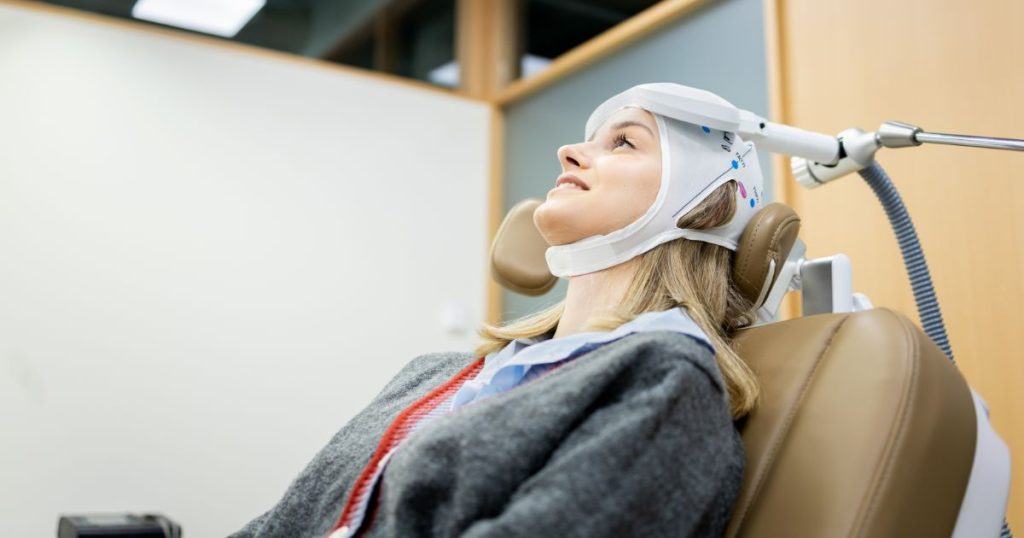
If standard treatments haven’t provided the relief you hoped for, TMS may offer another option. Transcranial Magnetic Stimulation (TMS) is a non-invasive treatment that uses focused magnetic pulses to stimulate areas of the brain involved in mood and emotional regulation. Unlike medication, TMS does not circulate through the body and is not associated with common side effects like weight gain, sedation, or emotional blunting.
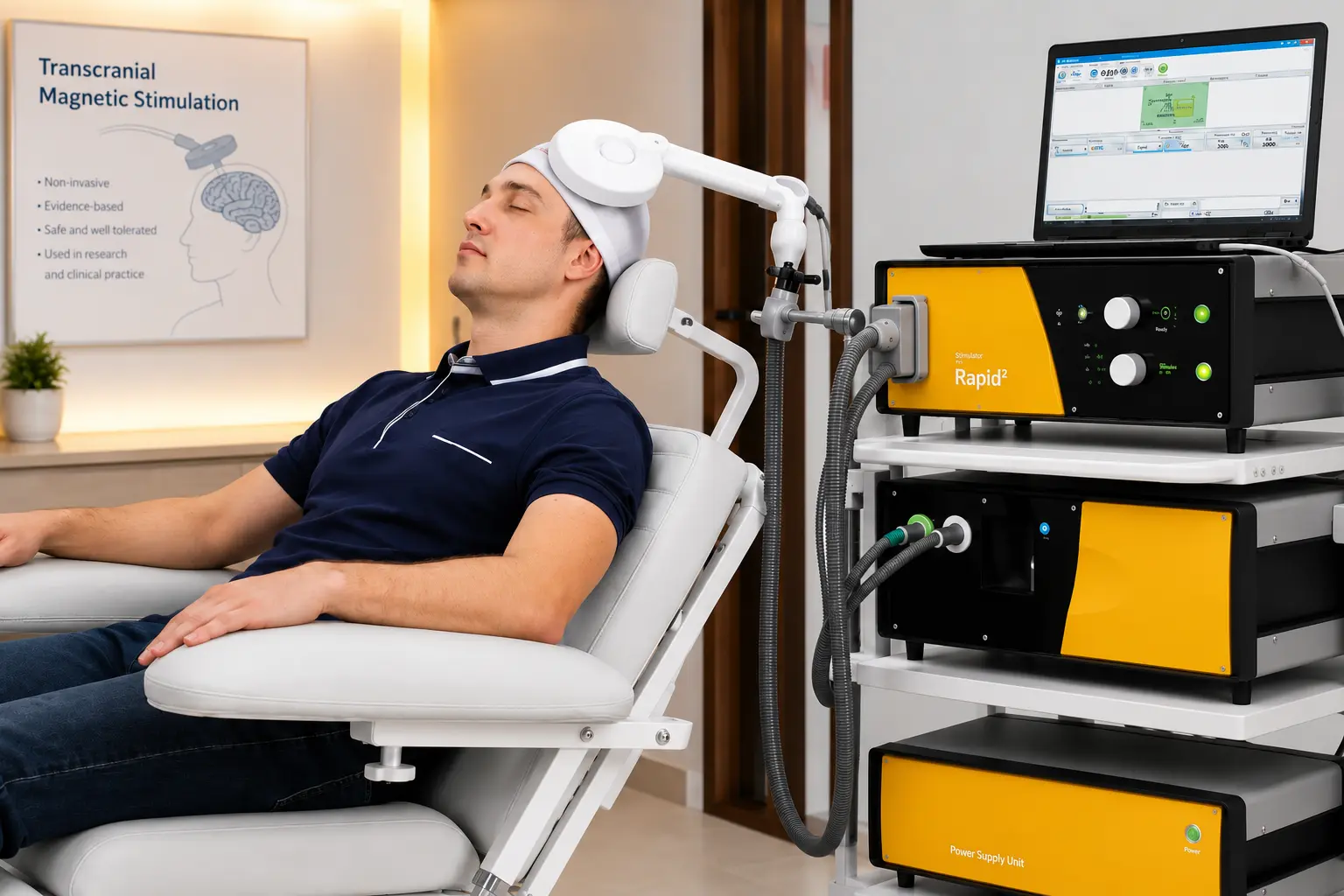
What Is TMS?
TMS is an outpatient treatment performed while you remain awake and comfortable. A magnetic coil is placed gently against the scalp to deliver targeted pulses to brain regions involved in depression. Sessions require no anesthesia, no IV, and no downtime, allowing most patients to return to daily activities immediately afterward.
iStandard TMS Protocol
Standard TMS is the most widely used and insurance-covered approach. Treatment is typically performed five days a week for about six weeks. It may be appropriate for patients with treatment-resistant depression, OCD, Anxious depression, medication side effects, or those seeking a non-medication option. Following a physician led comprehensive evaluation, initial visits include personalized brain mapping, followed by short treatment sessions and progress tracking using validated symptom scales.
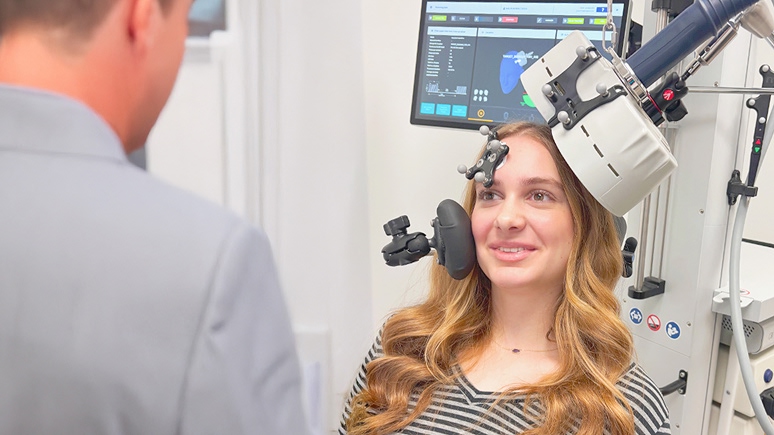
iiAccelerated TMS Protocols
Accelerated TMS delivers multiple sessions per day over a shorter time frame. These approaches may benefit patients seeking faster treatment schedules or more intensive neuromodulation options. Some protocols are FDA-cleared, while others may be considered investigational or self-pay depending on the device and insurance coverage.
What Can TMS Help Treat?
TMS is most commonly used for major depressive disorder and treatment-resistant depression. Depending on the protocol, it may also help with anxious depression, OCD, medication intolerance, and persistent low motivation or energy despite treatment.
Is TMS Safe?
TMS is generally well tolerated. Common side effects may include mild scalp discomfort, headache, temporary fatigue, or brief facial twitching during treatment. Serious side effects such as seizure are rare, but all patients undergo careful screening to determine if TMS is safe and appropriate for them.
The Goldstone Difference
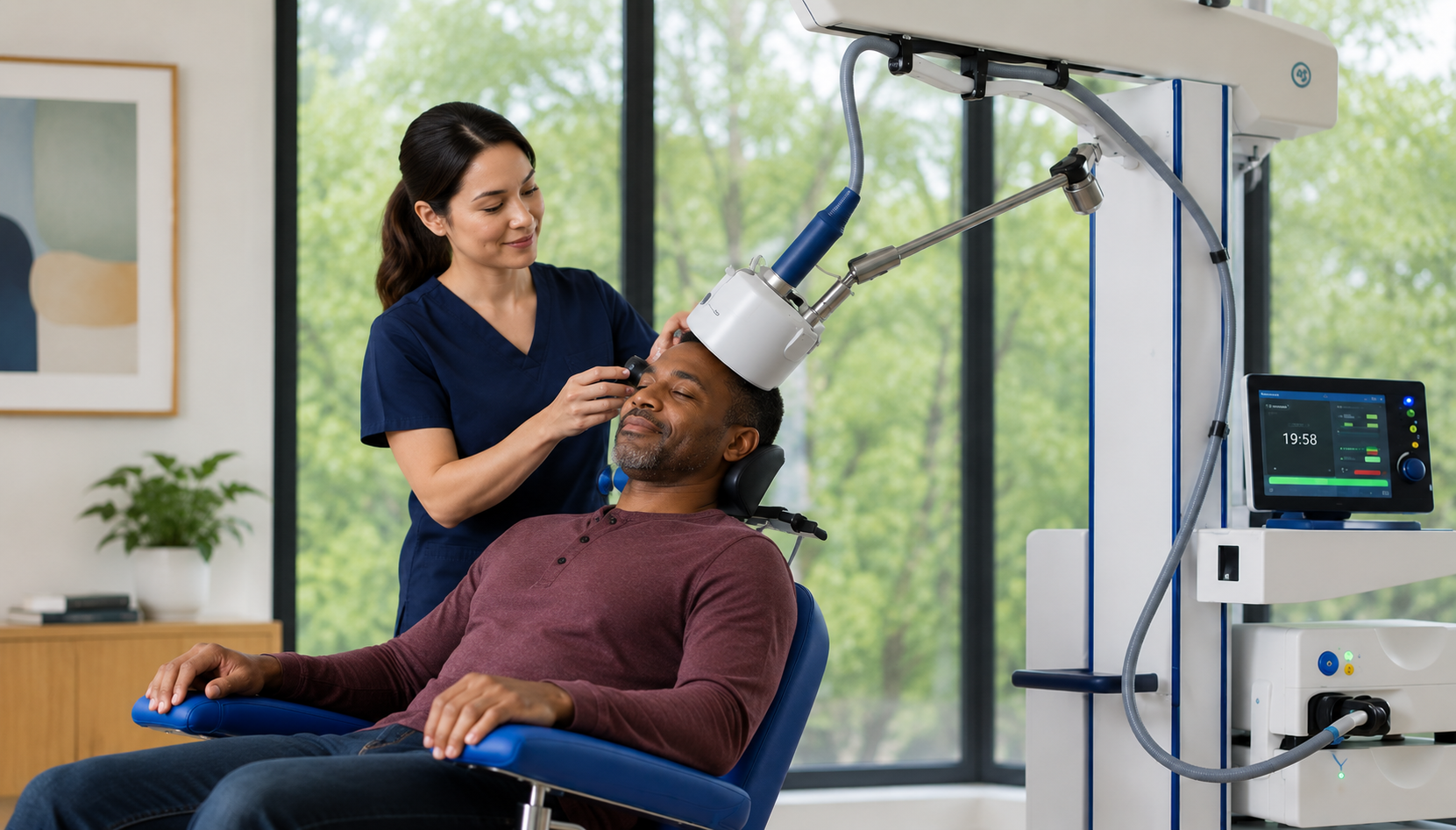
At Goldstone Psychiatry & Neuromodulation Center, TMS care is physician-led and personalized. Our approach includes careful diagnostic evaluation, treatment-resistance assessment, customized protocol selection, insurance support, and ongoing symptom tracking. TMS care is also integrated with broader psychiatric treatment, including medication management, therapy coordination, and Spravato/ketamine evaluation when appropriate.
Common Questions
Does insurance cover TMS?
Most commercial insurance plans and Medicare cover standard TMS for qualifying patients with major depressive disorder, though prior authorization is usually required.
Can I drive after treatment?
Yes. TMS does not require sedation or recovery time, and most patients return to normal activities immediately after treatment.
What if TMS doesn’t work for me?
Not every patient responds to TMS, but alternative strategies and treatment adjustments can be explored, including advanced protocols or Spravato/ketamine therapy when appropriate.
Find Out Whether TMS Is Right for You
If depression has continued despite medication, therapy, or other treatments, TMS may offer a new path forward. A consultation can help determine whether standard TMS, accelerated TMS, or another advanced treatment option may be right for you.
Contact Us
(832) 300-8990
3120 Southwest Fwy, Ste. 617 Houston, TX 77098
Schedule online. It’s easy, fast and secure.