Goldstone Psychiatry & Neuromodulation Center
Psychiatry & Neuromodulation Center
Military & Veterans Mental Health
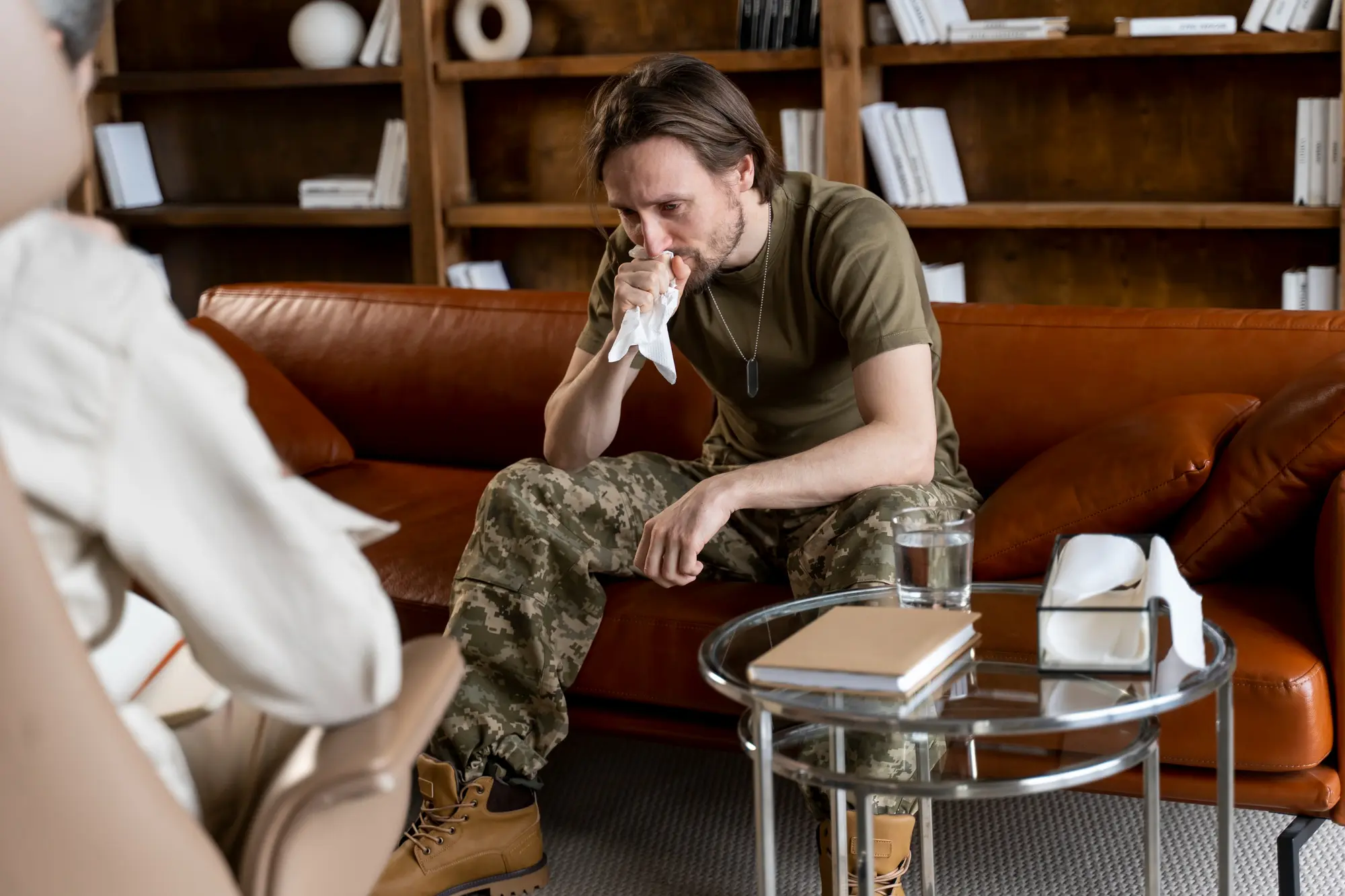
For Those Who've Served
Service shaped you. It also asked a great deal of you. Both can be true.
Military service builds discipline, purpose, and bonds that civilians rarely understand. It can also leave marks — some visible, some not — that show up months or years later.
This service is for active-duty service members, veterans, reservists, National Guard members, retirees, and military-connected individuals navigating the psychiatric impact of service.
What we commonly support
- PTSD and trauma symptoms
- Depression — including treatment-resistant forms
- Anxiety, panic, and feeling unsafe in ordinary settings
- Sleep disruption — insomnia, nightmares, dependence on substances or sleep aids
- Anger and irritability
- Moral injury and survivor’s guilt
- Substance use
- Reintegration and identity shifts after service
What we see and treat
- PTSD and trauma symptoms — intrusive memories, nightmares, hypervigilance, startle response
- Compassion fatigue — numbness, detachment, the feeling there’s nothing left to give
- Moral injury — guilt, shame, anger after impossible situations
- Depression and anxiety — including high-functioning forms easy to hide at work
- Insomnia and shift-work disruption
- Anger and irritability that follows you home
- Substance use — alcohol, cannabis, sedatives used to sleep or unwind
More than PTSD
PTSD is part of military mental health, but not the whole story. Some service members and veterans struggle with depression, sleep, anger, substance use, or the loss of mission and structure that comes with leaving service.
We look at the full picture — your service history, current life, strengths, and what recovery means to you — not just a single diagnosis.
Care that respects military culture
Military culture values endurance, discipline, and strength under pressure. Those qualities can be powerful sources of resilience. They can also make it hard to acknowledge distress.
We don’t see symptoms as weakness. We see them as signals from a system that’s been carrying a great deal.
✦ Coming Soon
For veterans whose depression, anxiety, PTSD or other conditions hasn’t responded to standard treatment, Goldstone is preparing to offer Spravato, and ketamine therapy.
Common questions
Will seeking care affect my clearance or career?
Generally, seeking mental health care doesn’t disqualify you from clearances or service. Specific implications depend on branch, role, and circumstances. Care decisions are private and HIPAA-protected unless legally required disclosures apply.
Can family members be seen?
Yes. Spouses, partners, and adult family members are welcome — and often face unique stresses related to service.
Is telehealth available?
Yes. Most visits are available through telehealth across Texas, with in-person visits also available by appointment.
Book a consultation. We’ll meet your service with the respect it deserves — and your mental health with the care it deserves.
All Services
- Psychiatric Evaluation
- Treatment-Resistant Depression Consultations
- Medication Management
- Medication Simplification & Deprescribing
- Telepsychiatry
- Neuromodulation and Interventional Psychiatry Treatments
- Second-Opinion & Diagnostic Clarification
- Executive, Professional & Athlete Support
- First Responder & Healthcare Worker Support
- Military & Veterans Mental Health
- Burnout, Stress & Performance Optimization
- Young Adult GPS Program
- Retirement Transition Support
Contact Us
(832) 300-8990
3120 Southwest Fwy, Ste. 617 Houston, TX 77098
Schedule online. It’s easy, fast and secure.