Goldstone Psychiatry & Neuromodulation Center
Psychiatry & Neuromodulation Center
First Responder & Healthcare Worker Support
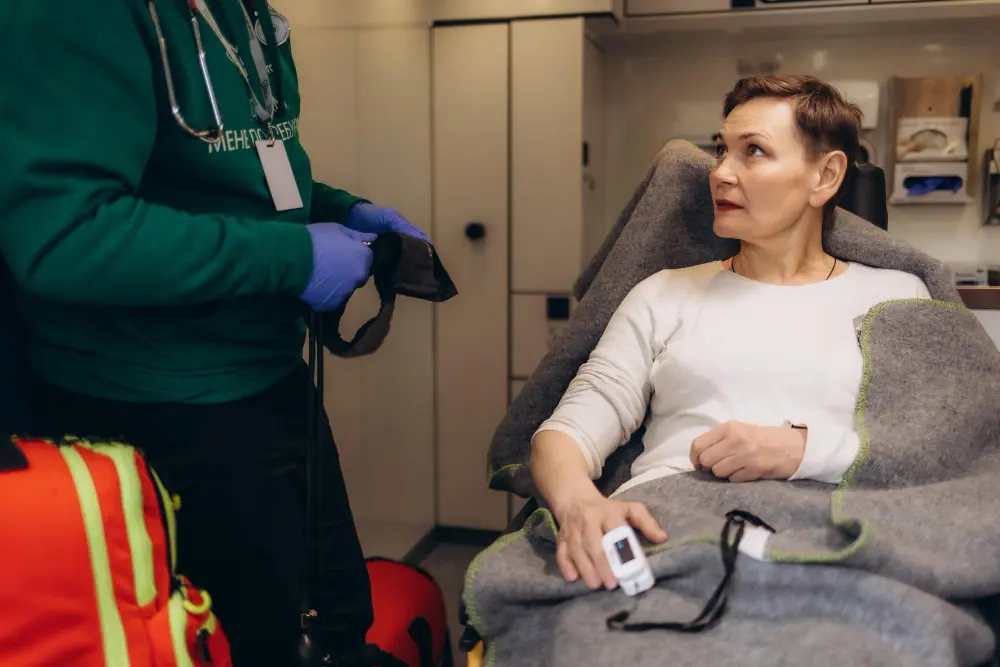
Care for the People Who Run Toward Crisis
You’ve held a lot. You don’t have to hold it alone.
Police officers, firefighters, EMS, dispatchers, nurses, physicians, ED staff, ICU clinicians, and mental health workers carry a particular kind of weight. Calls and shifts that most people will never see. Decisions made under pressure that don’t leave when the shift ends.
Over months and years, that weight changes the nervous system. Sleep gets thinner. Patience gets shorter. Closeness with family gets harder. Sometimes the symptoms are obvious. Often, they’re hidden behind a uniform that’s still showing up to work.
Goldstone Psychiatry offers both in-person and secure telehealth visits, available across Texas. Confidentiality and discretion are central to how we work.
More than burnout
What first responders and healthcare workers experience often isn’t ordinary work stress. Repeated trauma exposure, moral responsibility, grief, and high-stakes decision-making leave a different kind of mark.
Care for this population needs to be more than “set better boundaries” or “take a vacation.” It needs to be trauma-informed, clinically grounded, and respectful of the culture you work in.
What we see and treat
- PTSD and trauma symptoms — intrusive memories, nightmares, hypervigilance, startle response
- Compassion fatigue — numbness, detachment, the feeling there’s nothing left to give
- Moral injury — guilt, shame, anger after impossible situations
- Depression and anxiety — including high-functioning forms easy to hide at work
- Insomnia and shift-work disruption
- Anger and irritability that follows you home
- Substance use — alcohol, cannabis, sedatives used to sleep or unwind
Confidentiality matters
Many people in these roles delay care because they worry about stigma, employment, licensure, or how it might look. We get it.
Your care is confidential and HIPAA-protected. We don’t contact employers, departments, fitness-for-duty offices, or licensing boards without your written consent — except in narrow circumstances required by law.
How we work with you
Care is built around the realities of your role:
- Comprehensive psychiatric evaluation
- Medication management with attention to alertness, reaction time, and shift work
- Sleep and shift-work optimization
- Trauma-informed treatment planning
- Support for compassion fatigue and moral injury
- Substance use support when relevant
- Coordination with trauma-focused psychotherapy
✦ Coming Soon
For depression, anxiety and other conditions that haven’t responded to standard treatment, advanced options including Spravato, and ketamine therapy are coming to Goldstone. We’ll be ready to offer accelerated TMS protocols designed for people who can’t take 6-8 weeks of daily clinic visits.
Common questions
Will my department find out?
No. Your care is confidential and HIPAA-protected. We don’t contact employers, departments, or licensing boards without your written consent.
Can I be seen outside of work hours?
Yes. Evening, early-morning or weekend telehealth slots could be arranged.
I'm not sure if it's PTSD — does this still fit?
Yes. Many first responders and healthcare workers have stress, depression, sleep, or burnout symptoms that don’t meet full PTSD criteria but still need real care. The evaluation will help clarify what’s going on.
Can family members be seen?
Yes. Spouses and partners are welcome — and often face their own version of what you carry.
Book a consultation. Whatever you’ve been carrying — we’ll meet it with the care it deserves.
All Services
- Psychiatric Evaluation
- Treatment-Resistant Depression Consultations
- Medication Management
- Medication Simplification & Deprescribing
- Telepsychiatry
- Neuromodulation and Interventional Psychiatry Treatments
- Second-Opinion & Diagnostic Clarification
- Executive, Professional & Athlete Support
- First Responder & Healthcare Worker Support
- Military & Veterans Mental Health
- Burnout, Stress & Performance Optimization
- Young Adult GPS Program
- Retirement Transition Support
Contact Us
(832) 300-8990
3120 Southwest Fwy, Ste. 617 Houston, TX 77098
Schedule online. It’s easy, fast and secure.